
One of the first decisions importers face is whether to source foldable (soft, fabric) storage boxes or rigid (hard) containers. The right answer depends on your customers, your freight budget, and your shelf strategy. Here's a clear, side-by-side breakdown.
At a Glance
| Factor | Foldable (Non-Woven Fabric) | Rigid (Plastic / Cardboard) |
|---|---|---|
| Material | Non-woven PP, cotton, felt | PP plastic, PET, corrugated board |
| Collapsible for shipping | Yes — flat-packs to ~10% volume | No — ships assembled |
| Freight cost | Low (more units per container) | High (bulky, air-filled) |
| Durability | Medium (3–5 yrs with care) | High (rigid, washable) |
| Breathability | Breathable — avoids mustiness | Sealed — can trap moisture |
| Unit cost | Lower | Higher |
| Best for | Closets, drawers, under-bed, retail gifting | Garage, toys, heavy/industrial items |
Foldable Storage Boxes
Foldable boxes are made from non-woven polypropylene fabric stretched over cardboard or plastic panel inserts. They collapse flat when empty, which is their superpower: a single container can hold thousands of flat-packed boxes instead of hundreds of assembled ones. That translates directly into lower sea-freight costs and easier warehouse handling.
Pros: low shipping volume, lightweight, breathable, customizable in color/print, lower unit cost, premium "giftable" look. Cons: less rigid under heavy loads, fabric can stain, not waterproof.
Rigid Storage Boxes
Rigid containers — typically molded PP plastic or reinforced cardboard — hold their shape without inserts and survive rough handling. They're ideal for garages, kids' toys, and any application where structure matters more than shipping efficiency.
Pros: very durable, stackable, washable, see-through options, protect fragile contents. Cons: ship assembled (high freight), higher unit cost, less customizable aesthetics.
The Freight Math Importers Forget
This is where foldable wins decisively. Because foldable boxes flat-pack, you can fit roughly 5–8× more units per cubic meter than rigid equivalents. On a 40ft container, that difference can mean thousands of dollars saved per shipment — often enough to offset the entire product cost gap. For new brands testing a market, foldable lets you import a wider SKU range per container.
Which Should You Import?
- Launching a home-organization brand? Start with foldable non-woven boxes — lower risk, lower freight, easy to brand.
- Serving garage/storage-shed customers? Add rigid plastic bins for durability.
- Doing private label for retailers? Foldable's print/color flexibility makes shelf appeal easy.
- Mixed strategy: many importers carry 70% foldable + 30% rigid to cover both use cases.
Material & Quality Notes
For foldable boxes, fabric weight (40–120 g/m²) determines feel and price — 80 g/m² is a solid mid-range. Request OEKO-TEX or REACH compliance for EU/US shelves. For rigid, verify BPA-free plastic and recycled content if sustainability is a selling point.
Need Help Building Your Product Mix?
We manufacture both foldable non-woven boxes and rigid organizers with full OEM/ODM customization. Tell us your target market and we'll recommend the right mix.
Request a Free QuoteRelated Articles

How to Choose a Reliable Storage Box Manufacturer in China
A 2026 buyer's guide: what to verify, which questions to ask, red flags to avoid.
Read more →
Custom & OEM Storage Boxes: A Complete Guide for Importers
MOQ, materials, sampling, and the full production workflow explained for buyers.
Read more →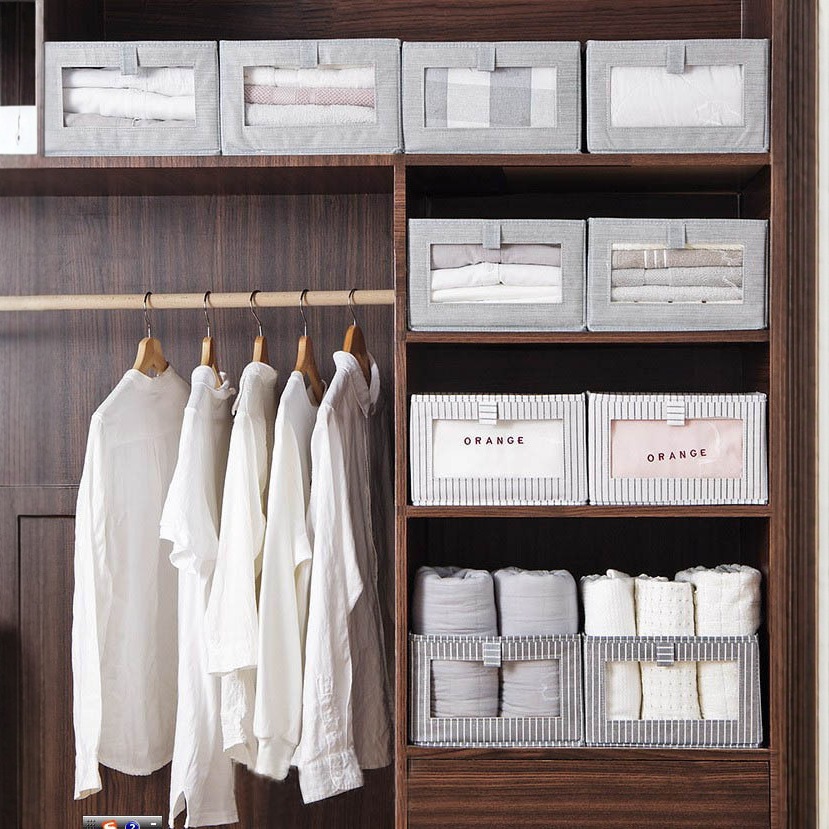
10 Creative Ways to Organize Your Closet with Storage Boxes
Practical, creative ideas to turn a cluttered closet into a calm, accessible space.
Read more →